by Tanya HAFFNER | Jun 4, 2018 | The Nation’s Health
One in two people in the UK will be affected by cancer at some point in their lives. The important new expert report by the World Cancer Research Fund (WCRF) has been published, evaluating the links between diet, nutrition, physical activity and cancer and the past decade of cancer prevention research.
It finds that around 40% of cancers could be prevented by making healthy lifestyle choices.
Here’s a summary of the key findings, along with WCRF recommendations about how we can best help prevent cancer.
Key lifestyle factors linked to cancer
1. Body fatness
- There is strong evidence that greater body fatness is a cause of many cancers – including pancreatic cancer, liver cancer and ovarian cancer. Science in relation to the link has grown over the last decade.Rates of overweight and obesity have been rising in most countries. Figures released on obesity just this week show that in the UK almost 60% more children in their last year of primary school are classified as ‘severely obese’ than in their first year.WCRF says that if current trends continue, being overweight or obese is likely to overtake smoking as the number one risk factor for cancer.
- Whilst greater weight gain in adulthood increases the risk of post-menopausal breast cancer, evidence showed that being overweight or obese as an adult before menopause decreases the risk of pre-menopausal breast cancer. Also, being overweight or obese between the ages of 18 and 30 years decreased the risk of pre- and postmenopausal breast cancer.Despite the findings, it is important to know that WCRF recommend maintaining a healthy weight throughout all stages of life.
WCRF Expert Panel opinion – Keep weight within the healthy BMI range (18.5kg/m2 – 24.9kg/m2) and avoid weight gain in adult life. WCRF explain more about BMI and provide a useful BMI calculator.
2. Dietary factors
a. Wholegrains, vegetables and fruit
- Wholegrains and other foods containing dietary fibre decrease the risk of colorectal cancer. This includes both foods that naturally contain fibre and foods that have had fibre added.
- Beta-carotene in foods or supplements is unlikely to have a substantial effect on the risk of prostate cancer.
- Foods contaminated by aflatoxins (toxins found in some fungi) increase the risk of liver cancer. Find out more about what this means on the WCRF website.
- Foods preserved by salting increase the risk of stomach cancer.
WCRF Expert Panel opinion – For wholegrains and other foods containing dietary fibre, the evidence shows that, in general, the more people consume, the lower the risk of some cancers.
We are advised to consume at least 30 grams of fibre per day (see the fibre fact sheet from the British Dietetic Association for more information on how to achieve this).
A diet high in all types of plant foods is recommended including at least five portions of vegetables and fruit per day. This poster from WCRF shows what counts as a portion.
b. Animal products
- Red meat and processed meat increase the risk of colorectal cancer.
- Cantonese-style salted fish increases the risk of nasopharyngeal cancer.
- Dairy products decrease the risk of colorectal cancer.
WCRF Expert Panel opinion – For people who eat meat, limit consumption of red meat, such as beef, pork and lamb, to no more than three portions per week: 350–500g cooked weight. Eat little, if any, processed meat.
c. Alcoholic drinks
- Consuming alcoholic drinks increases the risk of:
- Mouth, pharynx and larynx cancers
- Oesophageal cancers
- Breast cancer (pre- and post-menopause)
- Two or more alcoholic drinks a day increase the risk of colorectal cancer.
- Three or more alcoholic drinks a day increase the risk of stomach cancer and liver cancer.
- Up to two alcoholic drinks a day decrease the risk of kidney cancer (though note, WCRF advise that this is far outweighed by the increased risk for other cancers).
WCRF Expert Panel Opinion – The evidence shows that, in general, the more alcoholic drinks people consume, the higher the risk of many cancers.
WCRF advise that for cancer prevention, it’s best not to drink any alcohol at all. Indeed, there is no threshold for the level of consumption below which there is no increase in the risk of at least some cancers.
3. Physical activity
- Being physically active decreases the risk of:
- Colon cancer
- Breast cancer (post-menopause)
- Endometrial cancer
- Vigorous physical activity (e.g. running or fast cycling) decreases the risk of:
- Pre- and post-menopausal breast cancer
WCRF Expert Panel Opinion – The evidence implies that, in general, the more physically active people are, the lower the risk of some cancers.
We are advised to do at least 150 minutes of moderate intensity activity (examples include brisk walking, cycling, household chores, swimming, dancing) or 75 minutes of vigorous activity (examples include running, aerobics, squash, netball, fast cycling) per week.
4. Other factors related to cancer
The report also covers links between cancer and other dietary factors (including glycaemic load, vitamin supplements and non-alcoholic drinks); height and birth weight; and lactation. For more information, see the summary report.
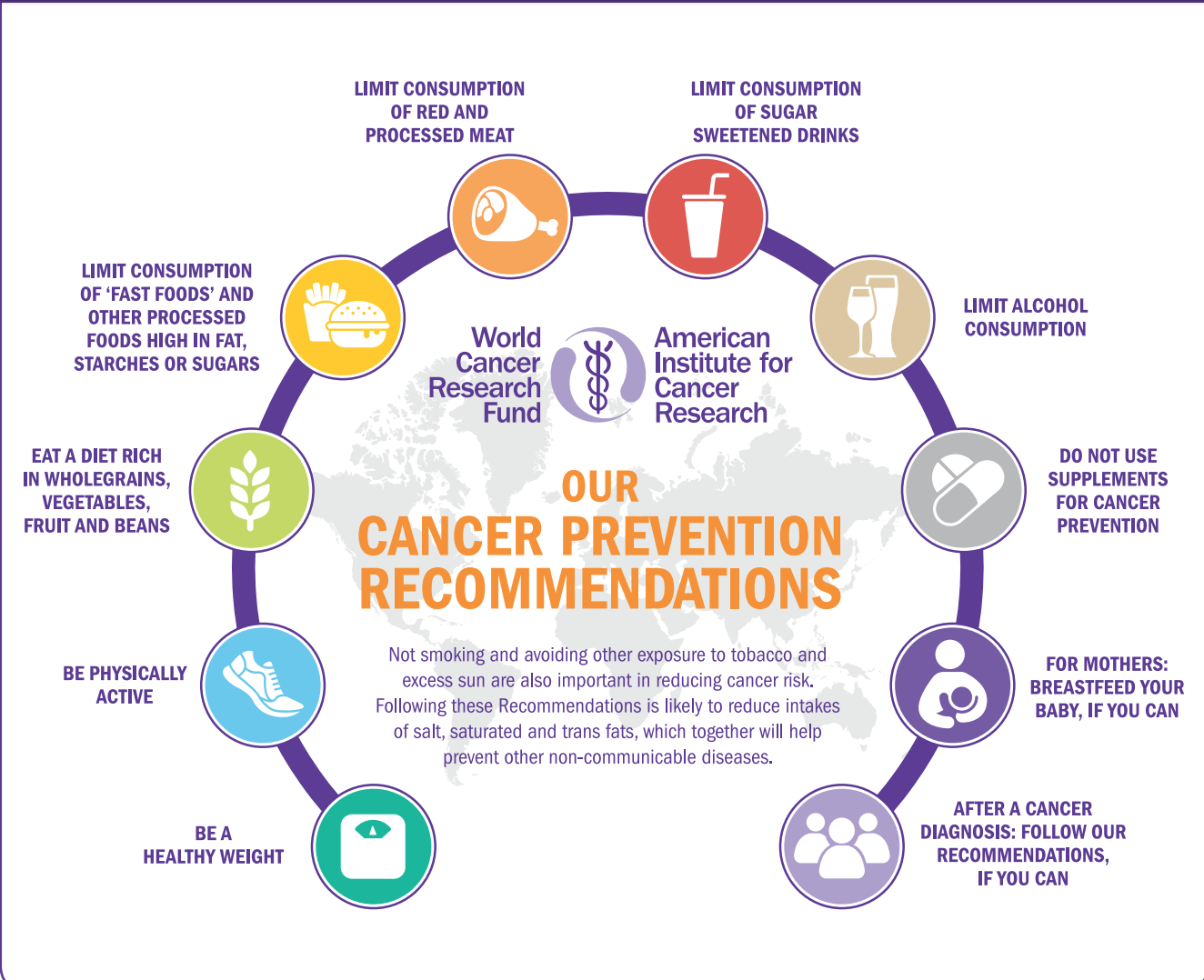
The 10 cancer prevention recommendations
The report includes 10 key recommendations for cancer prevention. Shown here as an overview infographic, there’s lots more useful detail in the report itself.

For lifestyle factors as discussed within this report, incorporating the recommendations into our lives as a whole package, rather than just focusing on a few individually, will be the most conducive for cancer prevention. It is interesting to know that between 30-50% of all cancer cases are estimated to be preventable through healthy lifestyles and avoiding exposures to occupational carcinogens (substances capable of causing cancer), environmental pollution and certain long-term infections.
NEW resources to help with cancer prevention:
- Cancer Health Check – A new online questionnaire check has been launched to help individuals find out where they are doing well and where they could make changes to their lifestyle to help reduce the risk of cancer.
- Toolkit – WCRF have published a downloadable toolkit which shows key points from the report using lots of visual representations of the findings.
- Interactive Cancer Risk Matrix – This tool gives information on how different aspects of diet, as well as body weight and physical activity, might be linked to cancer risk based on the strength of the evidence.
- Individual sections of the report – these can be accessed digitally as PDFs or as toolkits. This allows us to zoom in on specific dietary factors or different cancers and find out the evidence from the main report.
by Tanya HAFFNER | Feb 23, 2018 | Media in context, The Nation’s Health, Surveys and insights
Popular in the news this week is the story linking eating ‘ultra-processed’ foods and cancer, as reported by the Independent (‘Processed food, sugary cereals and sliced bread may contribute to cancer risk, study claims‘) the BBC the Daily Mail and The Guardian.
These headlines are based on a study published in the British Medical Journal this month. In the study, foods were classified based on the NOVA system, which relates to the nature, extent and purpose of food processing. Those falling under the category of ‘ultra-processed’ include:
- Mass-produced bread and buns
- Sweet or savoury packaged snacks including crisps, chocolate bars and sweets
- Sodas and sweetened drinks
- Meatballs, poultry and fish nuggets
- Instant noodles and soups
- Frozen or shelf-life ready meals
- Foods made mostly or entirely from sugar, oils and fats
Study details and findings
A cohort of 105,000 people were followed for an average of five years. A 10% increase in the proportion of ultra-processed foods in the diet was associated with a significant 12% increase in the risk of overall cancer and 11% in the risk of breast cancer.
Alongside the original study, the British Medical Journal have also published an editorial further explaining the findings.
Behind the headlines: the Nutrilicious dietetic view
Limitations of the study
While this story has been heavily publicised, there are several limitations of the study which mean we cannot draw firm conclusions:
- Those who ate a lot of ultra-processed foods had other behaviours that have been linked to cancer which could skew the results. They include being more likely to smoke, being less active, consuming more calories overall and more likely to be taking the oral contraceptive. The researchers stated that their impact ‘cannot be entirely excluded’.
- Cause and effect cannot be established for an observational study: we cannot say that ‘ultra-processed foods have caused the increase in cancer’. It is an association found.
- The term ‘ultra-processed’ is still somewhat vague, so it’s difficult to establish which specific foods might be responsible for the increased cancer risk, and why.
- The participants were mainly women who had decided to take part in a health and diet study themselves, so were likely to be interested in their health. This means the sample may not be highly representative of the general public.
That said, we can give credit to the large sample size used in the study giving more reliability to the findings.
Response from Cancer UK
Helping to put this study into context, Professor Linda Bauld from Cancer Research UK responded: “It’s already known that eating a lot of these foods can lead to weight gain, and being overweight or obese can also increase your risk of cancer, so it’s hard to disentangle the effects of diet and weight.”
She also said the study was a ‘warning signal to us to have a healthy diet’ but individuals should not worry about eating a bit of processed food ‘here and there’ as long as they were getting plenty of fruit, vegetables and fibre.
So, can we reduce the risk of cancer?
It’s estimated that one in two people will develop cancer at some point in their lives. Whilst some risk factors for cancer are non-preventable (such as genetics), there are still lots of things we can do to help reduce our risk:
- Eating a healthy, balanced diet
- Limiting red meat and avoiding processed meats
- Maintaining a healthy weight
- Abstaining from smoking
- Keeping alcohol intakes below government guidelines
- Protecting your skin from sun damage
- Knowing your body (e.g. checking for lumps)
For more details on all of the above, go to the National Health Service. The World Cancer Research Fund also carry out a continuous review of the scientific evidence into the subject of diet, lifestyle and cancer risk. Read their cancer prevention recommendations.
Takeaway message
This study does not allow us to draw firm conclusions about ultra-processed foods and cancer. However, we should certainly be reminded of the importance of diet and lifestyle in cancer prevention.
After smoking, excess weight is one of the biggest causes of cancer and it has also been estimated that about one third of cancers could be prevented by changing our diet and lifestyle. This includes being a healthy weight, following a healthy diet and engaging in physical activity.
What changes could you make to help reduce your risk?
Reference: Macmillan Cancer and Cancer Research UK
by Tanya HAFFNER | Dec 18, 2017 | Hot Topics in nutrition, Thoughts, Media in context, The Nation’s Health
Each week we analyse some of the hot headlines in health and nutrition news. This week we look at wine glass size increase, NHS breastfeeding incentives and a man who claims a raw vegan diet cured his cancer.
HEADLINE 1: WINE GLASSES NOW SEVEN TIMES LARGER THAN IN GEORGIAN TIMES
This week the BBC, the Daily Mail, the Guardian, The Daily Telegraph and The Sun reported on the increasing size of wine glasses being served up.
New research from Cambridge University found that wine glasses are as much as seven times larger than they were 300 years ago. Measurements were taken of 411 glasses from 1700 until modern day.
Looking at sources including eBay, museums and department stores, it was found that wine glass capacity has increased from an average of 66ml in the 1700s to 417ml in the 2000s, and the average wine glass size in 2016-2017 was 449ml.
Behind the headlines: the Nutrilicious dietetic view
While these headlines may lead us to assume that an increase in wine glass size directly correlates to an increase in wine consumption, this has not been proven by the research. Nor can we assume that reducing wine glass size would lead to a decrease in alcohol consumption – although it has been found previously that large tableware increases food consumption, so the same may be true for glass sizes with drink.
Not only are glass sizes increasing as this research has shown, but the average strength of wine has also increased. This points towards a greater consumption of alcohol than in the past.
The adverse effects of drinking too much alcohol is well documented. It can increase the risk of least seven types of cancer, including bowel cancer and breast cancer, and is also linked with pancreatitis, liver disease, heart disease and diabetes.
Calories can sometimes be forgotten with alcohol but in fact it contains nearly as many calories per gram as fat does (7kcal per gram for alcohol and 9kcal per gram for fat). A 175ml glass of wine contains around 160 calories. For more information on alcohol and calories see Drinkaware’s handy Unit & Calorie Calculator.
With Christmas looming, it can be easy to overdo the alcohol consumption. The government recommends both men and women stick to no more than 14 units per week. To find out what constitutes a unit see Drinkaware. For wine, a 125ml glass of wine would be one unit, so it is a worry to think that a 449ml glass would contain over three units.
The take home message is to not exceed government guidelines for alcohol consumption and to be aware of glass size as this may well have a role in the amount of alcohol consumed.
For more info: British Medical Journal
HEADLINE 2: OFFER CASH INCENTIVES TO MOTHERS TO PROMOTE BREASTFEEDING
The Guardian, the Evening Standard, the BBC, The Daily Telegraph and the Daily Mail have reported on how shopping vouchers could potentially be used to help increases rates of breastfeeding in the UK.
This is based on a trial of 10,000 women in deprived areas which found that giving shopping vouchers to mothers resulted in a significant rise in breastfeeding rates.
The vouchers were worth £120 and were provided if the babies received breastmilk (including expressed) at two days, 10 days and six weeks old. If babies were still being breastfed at six months, a further £80 of vouchers were given to the mothers.
A 6% increase in rates of breastfeeding was found which the researchers concluded was a modest but statistically significant increase.
Behind the headlines: the Nutrilicious dietetic view
One limitation of this study is that we cannot be sure that the reported rates of breastfeeding are accurate. It relies on the honesty of the mother and potentially an economically struggling mother may report that she is breastfeeding when in reality she is not in order to obtain the vouchers. The data is therefore unreliable as no clinical test was used to confirm whether a mother was breastfeeding. We cannot say that by employing such a scheme on a larger scale in the UK would actually increase breastfeeding rates.
However, it is good that methods are being tested and investigated to help try and encourage breastfeeding, as it offers many benefits for both mother and baby. It is perfectly designed for the newborn baby, helps protect the baby from infections and diseases, provides health benefits for the mother, is free of cost and is ready whenever the baby needs it. It can also help with bonding.
In the UK breastfeeding rates are particularly low. The NHS advises exclusive breastfeeding for six months. The most recent UK Infant Feeding Survey highlighted that:
- 81% women initiated breastfeeding (69% exclusively)
- 69% breastfeeding at one week (46% exclusively)
- 55% breastfeeding at six weeks (23% exclusively)
- 35% breastfeeding at six months (1% exclusively)
So there is clearly huge room for improvement in this country.
Breastfeeding is not necessarily easy. The NHS acknowledges this and has provided advice on common breastfeeding problems. Identifying barriers to breastfeeding and providing plenty of support to mothers remains of key importance to help increase rates in the UK.
HEADLINE 3: MAN CLAIMS HE ‘CURED’ STAGE 4 CANCER BY SWITCHING TO VEGAN DIET
Also in the news this week is story about a man who claims to have cured his stage 4 cancer by following a vegan diet. This was picked up by the Metro (Man claims he ‘cured’ stage 4 cancer by switching to vegan diet), the Daily Mail (Father of two CURED cancer by going vegan), the Mirror (Brave cancer sufferer shares incredible story) and The Sun (Did vegan diet cure cancer?).
Rob Mooberry was diagnosed with stage 4 colorectal cancer in 2012 and believes his tumour shrank by 80% by following a raw vegan diet.
From the information we are given, it is understood Rob had undergone surgery, radiotherapy and chemotherapy (following which his cancer reduced to stage 3a). He took a break before his next course of treatment as he felt he could not undergo it and changed his diet to a raw vegan diet in November 2012. His following scan in early 2013 showed that the cancer had reduced by 80%. Rob’s cancer has now been in remission for five years and he has not received any further medical treatment.
Behind the headlines: the Nutrilicious dietetic view
The question on many people’s minds will be whether or not the raw vegan diet was responsible for ‘curing’ the cancer. We certainly cannot prove that the diet what was responsible for the reduction in tumour size. There is no scientific evidence to suggest this could be the case and Rob had previously undergone medical treatment. Also, this report is purely based on anecdotal evidence and does not necessarily mean the same could be applied to the next person with the same results.
Cancer Research UK provide advice on alternative diets and their role in cancer. They do not recommend using alternative therapies in place of medical treatment due to the lack of scientific evidence of their effectiveness. They also point out that unproven methods of alternative cancer treatment could make someone very ill. Supporting this further is Macmillan Cancer Support, who state on their website that ‘no alternative therapies have ever been proven to cure cancer or even to slow its growth’.
Following a raw vegan diet needs careful attention to ensure it is balanced. This diet was recently discussed by the British Dietetic Association as it has been considered one of the ‘top 5 worst celeb diets to avoid in 2018’.
To sum up, there is no evidence to suggest that a raw vegan diet can cure cancer and it is important to remember alternative therapies should not replace normal medical treatment. Alternative diets can cause various health problems and advice from specialists should always be sought before embarking on such dietary changes.
For more info: Cancer Research UK and Macmillan Cancer Support.
by Tanya HAFFNER | Dec 4, 2017 | Retail, Food category comment, Media in context, The Nation’s Health, Surveys and insights
Each week we analyse some of the hot headlines in health and nutrition news. This week cheese; obesity & diabetes/cancer risk; and sugar reduction in Kellogg’s cereals.
HEADLINE 1: A piece of cheese a day keeps the doctor away
Picked up in the news this week by the Daily Mail, The Express, The Sun, The Independent and The Guardian is the suggestion that eating cheese could reduce the risk of heart attacks and strokes.
This is based on a meta-analysis of studies which concluded that consuming 40g of cheese per day reduced the risk of heart attack by 14% and stroke by 10%.
Behind the headlines: the Nutrilicious dietetic view
While cheese lovers are likely to have rejoiced, there are limitations to the research on which the headlines were based. The lack of randomised controlled trials included within the meta-analysis means that no causal relationship can be assumed between eating cheese and risk of heart disease. There are far too many factors which could interfere with the results.
Interestingly, there are previous large studies that have found no association between heart disease and eating cheese. Again, it can be hard to prove that it is the cheese eating that is causing the effects.
The harm that eating too much cheese can cause to health is well documented. Although it is a good source of protein, calcium, phosphorous and vitamin B12, it can also be high in saturated fats. Having too much saturated fat in the diet can increase levels of LDL cholesterol in the blood, which is an established risk factor for heart disease. A 30g portion of cheddar cheese (a matchbox size) contains 6.5g saturated fat (over a quarter of the reference intake for saturated fat – 20g). It can also be quite easy to go above this recommended portion size.
Some cheeses can be high in salt and there is a lot of evidence to show that too much salt can increase the risk of high blood pressure, another risk factor for cardiovascular disease.
Cheese can be enjoyed as part of a healthy diet if eaten in moderation and can provide a valuable source of various nutrients. Sticking to the recommended 30g portion size and opting for lower fat varieties such as lighter/reduced fat cheddars, cottage cheese and ricotta, can help ensure we don’t exceed our recommended maximum amount of saturated fat.
Moreover, foods such as low-fat yogurts and lower fat milks can also provide us with calcium and protein (two of the key nutrients found in cheese) but provide less saturated fats (as well as fewer calories, which would be helpful for those trying to lose weight).
For more information, go to British Heart Foundation and the NHS
HEADLINE 2: Diabetes is a key factor in WORLDWIDE cancer surge
The Express, The Sun and The Daily Mail reported on a finding that diabetes and obesity have been linked to causing cancer.
Researchers found that people with a high BMI (defined as above 25kg/m) who also had diabetes were behind 5.6% of new cancer cases globally, affecting 792,600 people in 2012. The method used was through assessing the increase in new cases of 18 cancers based on the prevalence of diabetes and high BMI in 175 countries (using data about BMI and diabetes in 2002 and cancers recorded in 2012).
Behind the headlines: the Nutrilicious dietetic view
This is an interesting study as it is the first study to have looked at the combined effect of having diabetes and obesity on cancer risk. Whilst the headlines alert us to the finding that over 5% of cancers were attributable to diabetes and cancer, there were significant differences between various groups of people, regions and types of cancer which should be noted. These are discussed in the original study. For example, cancers attributable to diabetes and being overweight were nearly twice as common in women (496,700 cases) as they were in men (295,900 cases).
It should be noted that there were limitations of the study. It is questionable whether the 10-year gap used between recording diabetes and high BMI to cancer incidence is entirely appropriate to enable conclusions to be drawn, as recognised by the researchers.
What we understand already is that obesity is certainly a risk factor for cancer. Analysis conducted by the World Cancer Research Fund has found that being overweight (BMI 25kg- 29.9/m) or obese (BMI 30kg/m and above) increases the risk of 11 types of cancer.
The Diabetes UK website outlines the link between diabetes and cancer. Some of the complications associated with diabetes can increase the risk of cancer. However, well-managed diabetes can help reduce the risk of any complications. Diabetes UK have given their thoughts on this study and stated that, “Diabetes doesn’t directly cause cancer, but this study adds to the evidence that having diabetes can increase the risk of certain types of cancer.”
The main message to take home from these headlines is that the increasing prevalence of obesity and diabetes may lead to an increase in risk of certain cancers. Maintaining a healthy weight, eating well, keeping physically active, not smoking, and not exceeding the government guidelines for alcohol consumption can all help lower the risk of diabetes and cancer.
For more information, go to Diabetes UK and WCRF
HEADLINE 3: Kellogg’s to cut sugar in kids’ cereals by up to 40%
Also in the news this week is the announcement that Kellogg’s will cut the sugar levels in children’s cereals by up to 40%. This was reported by the BBC, the Daily Mail, the Evening Standard, The Times and The Sun.
Kellogg’s have said they will reduce sugar levels by 20-40% by the middle of 2018 for Coco Pops, Rice Krispies and Rice Krispies Multi-Grain Shapes. They are also going to stop making Ricicles from January 2018, due to the amount of sugar in the cereal, and are putting a stop to on-pack promotions aimed at children on Frosties.
Behind the headlines: the Nutrilicious dietetic view
This is a very positive and encouraging move from Kellogg’s as the battle to reduce sugar consumption in the UK continues.
In March this year, officials at Public Health England called on food firms to cut sugar by 5% by the end of this year and by 20% by 2020. The Scientific Advisory Committee on Nutrition currently advise that free sugar intake in the UK should account for no more than 5% of our daily energy intake. Advice for the different age groups is as follows:
- Children 4-6 years – no more than 19g free sugars per day (5 teaspoons)
- Children 7-10 years – no more than 24g free sugars per day (6 teaspoons)
- Children 11 years + and adults – no more than 30g free sugars per day (7 teaspoons)
Although not the highest source of sugar in our diets, cereals do contribute to daily intake, with the most recent National Diet and Nutrition Survey highlighting that cereals are responsible for 5% of the added sugar intakes of adults and 6-8% of that of 4-10-year olds and teens. In our blog post last year A Health Check on New Breakfast Opportunities we discussed the need for more breakfast options to offer lower sugar choices and so this certainly is a positive step forward. With gradually a lesser number of options available that are high in sugar, it may be less overwhelming for consumers to make healthier choices.
Here is how much sugar is currently in the Kellogg’s products and how much they are to be reduced by:
- Coco Pops – 9g sugar per 30g serving. To be reduced to 5.1g per 30g serving (40% reduction, changing from about 2 teaspoons of sugar to just over 1 teaspoon).
- Rice Krispies – 3g sugar per 30g serving. To be reduced to 2.4g per 30g serving (20% reduction, changing from ¾ teaspoon of sugar to a little under 2/3 teaspoon of sugar).
- Rice Krispies Multi-Grain Shapes – 6.3g sugar per 30g serving. To be reduced to 4.5g per 30g serving (30% reduction, changing from about 1.5 teaspoons of sugar to just over 1 teaspoon)
A step forward to reduce the sugar content of any foods available on the market can only surely be a positive one.
For more information, go to Kellogg’s – Sugar and Breakfast Cereal and SACN 2015 – Carbohydrates and Health Report
by Tanya HAFFNER | Nov 27, 2017 | Hot Topics in nutrition, Media in context
Each week we analyse some of the hot headlines in health and nutrition news. This week: Breast cancer in larger women; vitamin D and arthritis; and health benefits of coffee.
HEADLINE 1: Breast cancer tumours ‘larger’ in overweight women
The BBC, Daily Mail and The Telegraph picked up on a Swedish study which found that cancerous breast lumps are less likely to be detected in overweight or obese women before the tumour becomes large. The suggestion is that they should therefore be offered more regular screening.
Behind the headlines: the Nutrilicious dietetic view
It is unclear for definite why cancerous lumps are less likely to be detected in women with high BMI. It could be because the tumours are growing at a faster rate or it could be that because their breasts are larger, the tumours were harder to find.
Current guidelines for screening in the UK are that all women aged between 50 and 70 are invited for screening every three years. Cancer Research UK have spoken out regarding this study, stating that it does not provide enough evidence to support a change in the guidelines.
In terms of breast cancer prevention, the role of Body Mass Index (BMI) has been recognised by Cancer Research UK, whereby being overweight (BMI 25-29.9kg/m2) or obese (BMI 30kg/m2 and above) is a known risk factor. Although screening guidelines are to remain the same, this study further reiterates the importance of maintaining a healthy weight.
Calculate your BMI
HEADLINE 2: Vitamin D may help prevent rheumatoid arthritis, suggests study
The Guardian reported on a laboratory study that investigated the role of vitamin D in rheumatoid arthritis (RA), following previous research showing it might have anti-inflammatory effects.
It was found that in non-diseased tissue, the immune cells responded well to active vitamin D. In contrast, the tissue from inflamed joints in people with RA was much less effective in responsiveness to vitamin D.
The researchers suggested that vitamin D supplementation may therefore be able to help prevent the onset of RA. They also said that while it is vitamin D is unlikely to be a successful treatment for established RA patients, if there was a route to make the diseased cells respond to vitamin D, then potentially this could help with treatment options. Another suggestion is that vitamin D supplementation may help with the prevention of inflammatory conditions such as RA. .
Behind the headlines: the Nutrilicious dietetic view
This was a small laboratory study that only involved 15 participants and much more research is needed to investigate why the RA cells were insensitive to vitamin D. Although useful in understanding vitamin D in RA, we cannot draw conclusions regarding the use of vitamin D supplements to either prevent or potentially help treat people with RA. The suggestions are pure speculation; there would be a lot more research needed to investigate both of these points
Regardless of the potential effects on inflammation, the UK’s Scientific Advisory Committee on Nutrition advise that all adults and children over the age of one should be taking a daily 10mcg vitamin D supplement during the autumn and winter months (October to March). With our main source of vitamin D through exposure to sunlight, it can be hard to get adequate supplies in these months. Although we can obtain vitamin D from foods such as oily fish, eggs, red meat and liver, sources are limited so supplements are a better way of being sure.
For more information, go to
BDA Food Facts, Vitamin D
Arthritis UK, Diet and Arthritis
HEADLINE 3: Three cups of coffee a day ‘may have health benefits’
News outlets once again jumped on a ‘healthy coffee’ study, with the BBC, ABC News, Daily Mail and The Guardian picking up on a study which looked into previous research into coffee and health. The researchers looked into more than 200 studies, most of which were observational by design.
Those who drank three cups of coffee per day appeared to reduce their risk of heart disease and of death from heart disease. The most notable benefits were the effects on liver disease and liver cancer, with coffee drinking reducing the risk.
Behind the headlines: The Nutrilicious dietetic view
In last week’s Nutrition News Digest we also reported on a study that found benefits of coffee drinking and reducing the risk of liver cancer.
Although this week’s study backs up recent research, similarly to last week it cannot prove that it is actually the coffee drinking causing the effects seen. There are many factors, including the lifestyle of coffee drinkers, which may contribute to the effects. Moreover, most of the studies included within the analysis were of low quality – as recognised by the researchers.
The headlines focus on the positive aspects of coffee drinking. Although most of the effects were found to be positive in this research, some of the studies also showed a harmful health outcome (e.g. for fracture risk in women).
There is a useful summary of the current evidence into coffee and health in an editorial in the British Medical Journal, Coffee gets a clean bill of health, which discusses the questions many people may be asking in response to these recent headlines, including:
1. whether coffee should be recommended to prevent disease; and
2. whether people should start drinking coffee for health reasons.
Both questions are answered as ‘no’. There is simply not enough sound evidence to make these conclusions.
Nevertheless, the advice remains the same in that a caffeine intake of up to 400mg per day (3-4 cups of coffee) is perfectly safe and that coffee is absolutely fine to include in moderation. Pregnant women should limit their intake to less than 200mg per day (2 cups of instant coffee).
For more information, go to:
NHS, pregnancy and caffeine
EFSA, Scientific opinion on the safety of caffeine